
Ratings agency ICRA on Wednesday revised downwards growth forecast for the domestic passenger vehicles industry to 8-11 per cent in the ongoing fiscal from the earlier estimate of 14-17 per cent on account of the ongoing semiconductor shortage. Similarly, for the two-wheeler segment, it said the volumes are expected to contract by 1-4 per cent in FY2022 against an earlier prediction of 6-8 per cent growth as affordability and demand sentiments of target clientele was hit sharply by the second wave of COVID-19 pandemic. With around 5 lakh units of production lost by various automakers in the passenger vehicles segment due to the semiconductor shortage, ICRA said the earnings loss for the OEMs (Original Equipment Manufacturers) could be around Rs 1,800 crore to Rs 2,000 crore for the ongoing fiscal.

Passenger vehicle retail sales in India witnessed a 10 per cent on-year jump in July driven by new model launches and enhanced discounts, industry body FADA said on Monday. Total passenger vehicle retail sales rose to 3,20,129 units in July, as compared to 2,90,564 units in July 2023. "Dealers reported benefits from good product availability, attractive schemes, and a wider range of products," the Federation of Automobile Dealers Associations (FADA) vice president C S Vigneshwar said in a statement.

Import Duty of Alloy Steel Long Products is likely to increase

Stalling the introduction of better emission standards is based on specious logic, especially in a country that has 13 of the world's most polluted cities.

Taiwan is keen to collaborate with India and help it become a leader in the semiconductor space, Jason Ho, chairman of the Taiwan Chamber of Commerce in India, said, asserting that the Taiwanese companies have the supply chain for things that the Indian market needs. Manufacturing semiconductors - used in electric and hybrid cars, drones, and communication devices - is fairly complicated, entails huge investment, and can be a cumbersome process.

Walmart's entry into India will mean profits for the Americans and jobs for the Chinese, says Mohan Guruswamy.

The final Budget for the fiscal is likely to be tabled in July after formation of the new government.

Ministries such as road transport and heavy industries are learnt to have objected to NITI Aayog's attempts to become an implementing body for the EV programme.
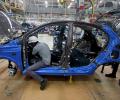
Automobile industry in India is going through a long-term structural slowdown as the compound annual growth rate (CAGR) across all major vehicle segments has witnessed a decline over the last three decades, as per industry body SIAM. The auto industry has been facing headwinds even before the COVID-19 pandemic derailed the entire sector last year, a research conducted by the Society of Indian Automobile Manufacturers (SIAM) has revealed. The study clearly shows that the pandemic is not the only reason for the auto sector slowdown, which is facing deeper structural issues that need attention, the industry body noted.

The two-wheeler segment has shown signs of recovery in the first half (H1) of calendar year (CY) 2024, largely driven by improving performance in rural areas. According to the Federation of Automobile Dealers Associations, rural contribution to two-wheeler sales surged by 57-60 per cent in the April-June quarter of 2024-25, indicating a rising demand in these regions. Experts believe that this trend will continue, supported by a favourable monsoon season and government initiatives aimed at rural development.
The Society of Indian Automobile Manufacturers had earlier revised the sales forecast for financial year 2012 downwards for the passenger cars at 10-12 per cent in July against 16-18 per cent announced at the beginning of the fiscal.

Dealer despatches will probably be a good signal of economic turnaround or further deterioration, says Devangshu Datta.

As Modi's government embarks on its third term, apart from ensuring these schemes boost India's green mobility, addressing bottlenecks like battery swapping and meeting PLI deadlines are likely to be the government's major tasks.

Mahindra & Mahindra (M&M) reported very strong results for the January-March quarter of the last financial year (Q4FY24), beating consensus comfortably. The margins of the automobile business improved 170 basis points (bps) year-on-year (Y-o-Y) to 8.8 per cent, while FES (Farm Equipment Sector) margins improved to 15.8 per cent (up 60 bps Y-o-Y), despite a decline in volumes due to cost optimisation and lower raw material costs.

The company is willing to partner existing players; to begin with commercial vehicle launch.
At a time when the automobile industry is eyeing a market of 2 million cars by 2010, various automobile projects of industry majors, including Tata Motors and Mahindra and Mahindra, are running behind schedule.
According to the Society of Indian Automobile Industry, domestic car sales last year fell to 18,07,011 units from 19,98,703 units in the previous year.

Seven manufacturers together post a 15% decli#8800 M&M, Ford and Honda buck trend.

Thanks to the late surge in sales towards the second half of the year, total domestic automobile sales in year 2009 grew by 16.93 per cent to 1,13,20,918 units compared to 96,82,113 units in 2008.

Auto sales continued to break record for the fourth consecutive month in October, with total vehicles sold in the country last month stood at 14,60,655 units.
The engine 'is set for a revolution that will change the face of the Indian automobile industry', the company claims.

Trade links with Israel have strengthened in the past few years, even as the value of goods exchanged with Iran has diminished. Iran accounted for $3.9 billion worth of India's exports in the four quarters ending December 2019, compared to $3.6 billion to Israel. However, India's exports to Iran dropped to $1.2 billion as of December 2023, on a rolling four-quarter basis, while exports to Israel grew to $6.1 billion in the same period.
2012 was undoubtedly a year of shocks and surprises for the automobile industry of India.
Beginning with a bang amid all the glitz and glamour of the biennial Auto Expo, the year will be ending with a whimper for the automobile industry as sales dwindle, and the worst-ever industrial violence at Maruti Suzuki's Manesar plant leaves a big scar.
Say this isn't the time to levy taxes, as industry is already struggling with slowing sales and rising costs; CBEC asks for supporting data.

Micron plans an assembly testing, marking and packaging project of $1 billion, and talks are on to set up a memory chip plant for captive requirements.

'The fact still remains that we will have to deliver, so the pressure is now on us to make sure we get our resources, our supplies lined up at acceptable costs.'

Apprentices get at an average of Rs 10,000 to Rs 12,000 per month which can double after one year of on-the-job training.

Facing a deepening slowdown, the auto sector is pinning hopes on the GST Council meeting on September 20 for a rate cut from 28 per cent to 18 per cent. However, states including Bihar, West Bengal, Kerala, and Punjab are of the view that the slowdown in the auto sector is not because of the GST rate but structural issues in the economy.

Passenger vehicle wholesales in India declined by 10 per cent to 2,61,633 units last month as compared to March this year, as COVID-19-led restrictions across various states impacted demand, auto industry body SIAM said on Wednesday. Passenger vehicle sales in March 2021, stood at 290,939 units.
The struggling Indian automobile industry on Monday reported yet another worst ever performance with overall domestic sales declining by 18.2 per cent in December 2008, as commercial vehicles and two-wheelers sales crashed heavily.

Domestic passenger car sales jumped by 39.48 per cent to 1,43,976 units in April. The figure for the corresponding month of the last year was 1,03,227 units.

Chip giant Qualcomm chief executive Cristiano R Amon and billionaire Gautam Adani on Monday discussed role of AI, semiconductors and edge appliances across markets in the fast changing global technology space. The two leaders met in Mumbai on Monday morning to discuss India's potential around semiconductors, AI and mobility, according to a social media post by Adani. While Qualcomm is big on designing and manufacturing semiconductors and wireless telecommunications products, Adani group had in 2022 bought a small quantity of fifth generation or 5G spectrum for private captive network deployment in ports, logistics and power generation among others.

Large number of buyers has put purchases on hold because of a combination of factors, including high fuel prices, higher insurance cost, and firm interest rates.
